




Downtown Milwaukee Sign Company
VIEW GALLERYDowntown Milwaukee Sign Company
Milwaukee Sign Company has been designing, fabricating, and installing commercial signage from our Sussex workshop since 2013, and downtown Milwaukee — the Historic Third Ward, East Town, and Juneau Town — is one of our most active service corridors. We work with corporate headquarters along Wisconsin Avenue and the riverfront, restaurants and retail in the Third Ward, professional offices around Cathedral Square, hotels and condo towers along the river, and the property management groups that operate the buildings that house all of them. Downtown installs run on a different clock than suburban work, and we plan accordingly.
Why downtown context matters
Downtown Milwaukee is not one sign environment — it is three or four overlapping ones, and the right sign for a Water Street restaurant is the wrong sign for a Wisconsin Avenue corporate tenant or a Third Ward boutique. The Historic Third Ward Architectural Review Board governs signs south of the Milwaukee River with strict standards on materials, illumination, projection, and historical compatibility. East Town and the Cathedral Square area mix mid-century commercial buildings with historic landmark structures, and city Downtown Design Review weighs in on the larger ones. The corridors along North Water Street, North Broadway, North Milwaukee Street, and East Wisconsin Avenue each have their own pedestrian-versus-vehicle reading dynamics — a blade sign that reads well at a slow walking pace is a different design from a building-mounted ID that has to be visible from a moving streetcar or a car at speed.
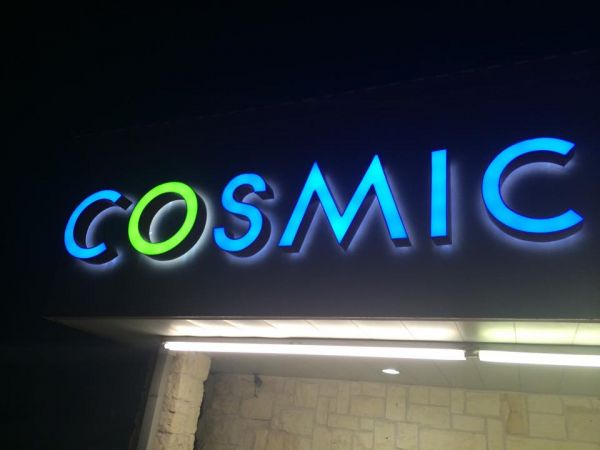
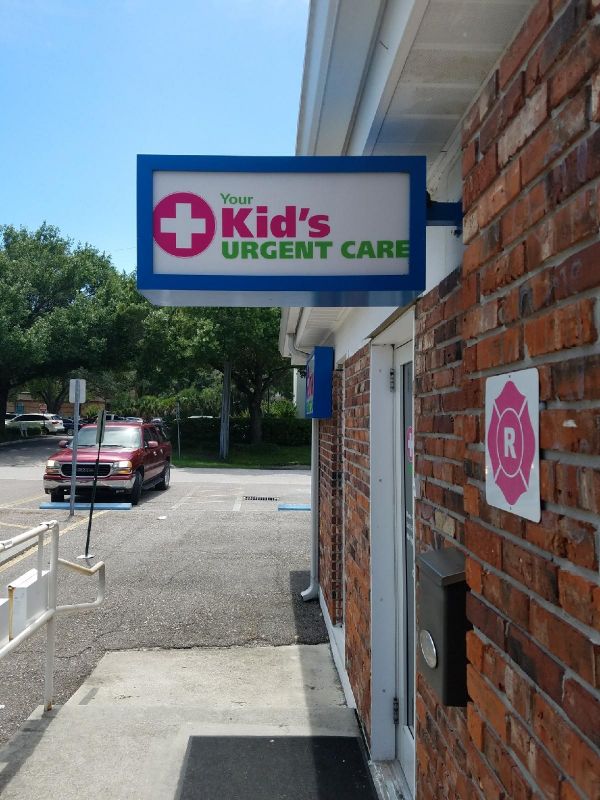
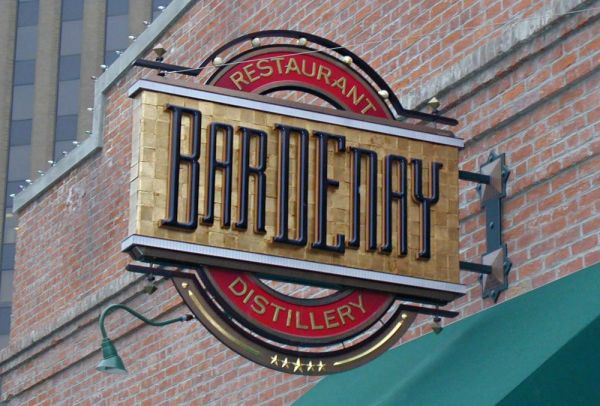
We design to the corridor a sign actually lives on. A Third Ward storefront gets a projecting blade sign sized to the building’s bay rhythm and lit to the ARB’s standards. A Wisconsin Avenue tenant ID gets letter sizing and depth tuned to the viewing distance and the building’s existing signage program. A Cathedral Square professional services office gets dimensional letters and a directional package that respect the surrounding architecture without disappearing into it. None of this is template work.
Sign types we produce for downtown businesses
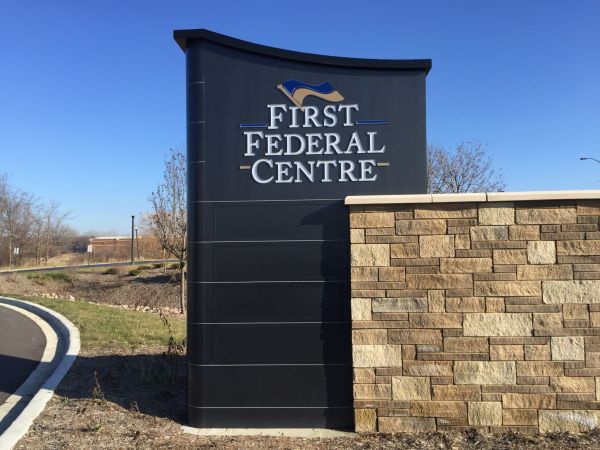
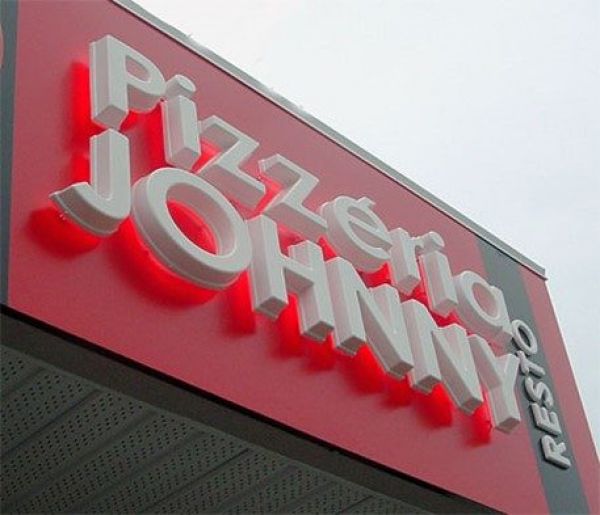
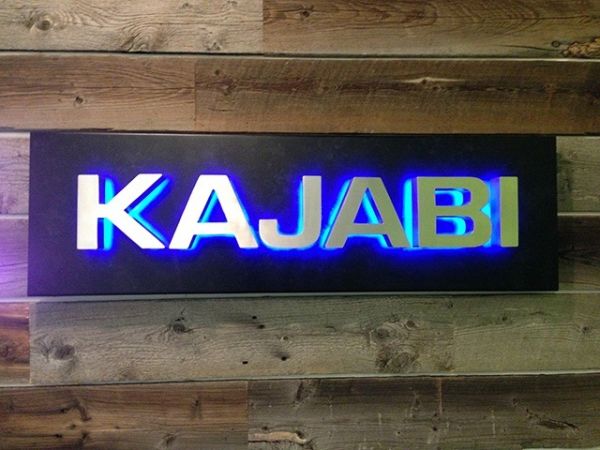
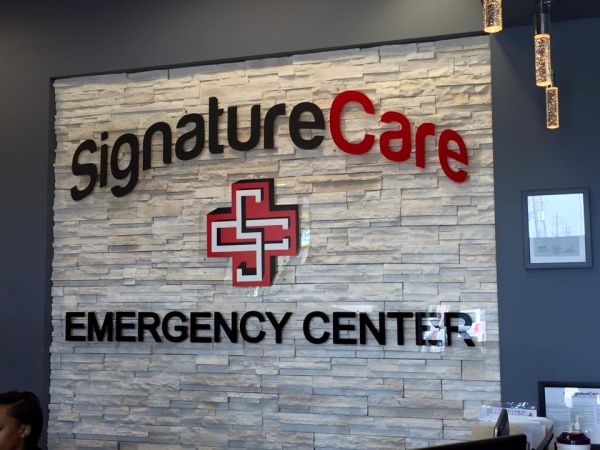
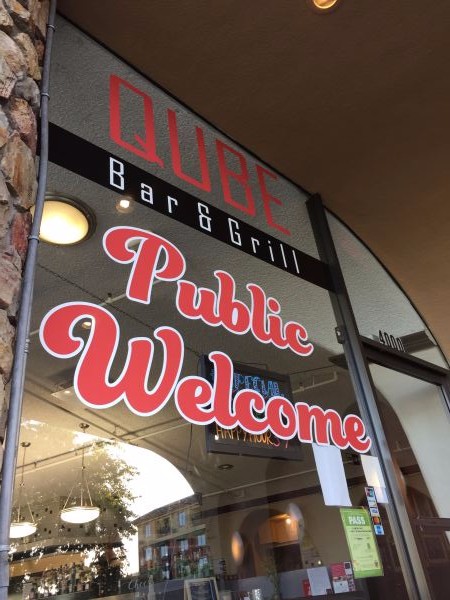
Every project starts in our Sussex shop and is installed by our own crew. The downtown sign types we most commonly produce are:
Every category includes site survey, code review, design and renderings, permit drawings where required, fabrication, installation, and electrical hook-up for illuminated signs.
Permits and downtown sign code
Most exterior signs in downtown Milwaukee require a city sign permit through the Department of Neighborhood Services, and depending on the address, one or more layers of design review on top of that.
Historic Third Ward Architectural Review Board governs signs in the Third Ward Historic District — roughly south of the Milwaukee River between North Milwaukee Street and the Lake Interurban line. The board reviews materials, illumination type, projection, mounting method, and historical compatibility. Plans go in with elevations, material samples, mounting details, and a written narrative. Review meetings are scheduled monthly, so timing matters; we build the calendar into the project timeline from the first conversation.
Downtown Design Review through the city’s Department of City Development applies to projects on larger parcels and along several primary corridors in East Town and Juneau Town. Review focuses on overall building program, scale, materials, and the relationship between signage and the architecture.
Cathedral Square and the East Side commercial overlays include their own constraints on illumination type, sign size relative to facade, and projection over the public way. Signs on Wisconsin Avenue and along Milwaukee Street face additional scrutiny on backlit cabinet style and digital displays.
Riverwalk-facing signage is governed by the Milwaukee Riverwalk District requirements when the sign reads to pedestrians on the walk itself. Materials, mounting, and lighting all factor in.
We prepare and submit the full permit and review package for every project — site plan, scaled drawings, mounting and electrical details, material specifications, and any narrative the review body requires. We also handle revisions, respond to staff comments, and represent the project through public review meetings when those are part of the approval path. There is never a separate “permitting fee” line — it’s included in the project quote.
How we work with downtown businesses
Downtown installs have constraints that suburban installs don’t. Curb-lane staging is often metered or restricted, building access usually requires coordination with property management, lift work over sidewalks or streets requires city Right-of-Way permits, and many buildings require certificates of insurance with specific endorsements before the install Sussexcan be scheduled.
Our process for downtown projects:
1. Site visit and survey. We come to your building, evaluate the sign-able surfaces, check existing tenant signage and any building sign criteria, and document the install logistics — access, height, power, and any property-management requirements.
2. Design and code review in parallel. While the design develops, we run the code review against the host district’s sign ordinance and any applicable historic or design-review overlays. You see one set of options that already meet the rules.
3. Permit package. Once you approve the design, we prepare and submit the full permit and review package. We track the application through the city and through any design-review meetings.
4. Fabrication. Built in our Sussex shop on the schedule that matches your install date. UL listing on all illuminated signs, electrical to code.
5. Installation. Scheduled around your business hours and the building’s access rules. Many downtown installs are before-business-hours or evening work. We pull traffic and Right-of-Way permits when the install requires lift work over the public way, coordinate certificates of insurance with property management, and protect adjacent storefronts and walkways during the install.
6. Inspection and final. We meet the city electrical and sign-permit inspectors on site, handle any punch items, and close the permit. You get a final sign-off package with the warranty information.
The same project manager handles your work from quote through final inspection. For corporate or multi-tenant projects, we present at building-management meetings as needed and coordinate with general contractors on building-wide signage programs.
Service area and contact
Milwaukee Sign Company is based in Sussex, WI, with our workshop at N63 W22625 Main St #105, Sussex, WI 53089. The downtown Milwaukee neighborhoods — the Historic Third Ward, East Town, and Juneau Town (the area covered by ZIP code 53202) — are fully within our standard service area, with no out-of-area charge. We service downtown installs regularly and schedule around building access rules and curb-lane logistics.
Sussex, WI 53089
8:00 AM – 5:00 PM
Frequently Asked Questions
Do downtown Milwaukee signs require special design review on top of the city permit?
In most cases, yes. The Historic Third Ward has its own Architectural Review Board, larger projects in East Town and Juneau Town go through Downtown Design Review, and several corridor overlays add constraints on illumination, size, and material. We prepare and submit the full review package and represent the project through the approval process.
Can you do signs for Historic Third Ward storefronts and meet the ARB rules?
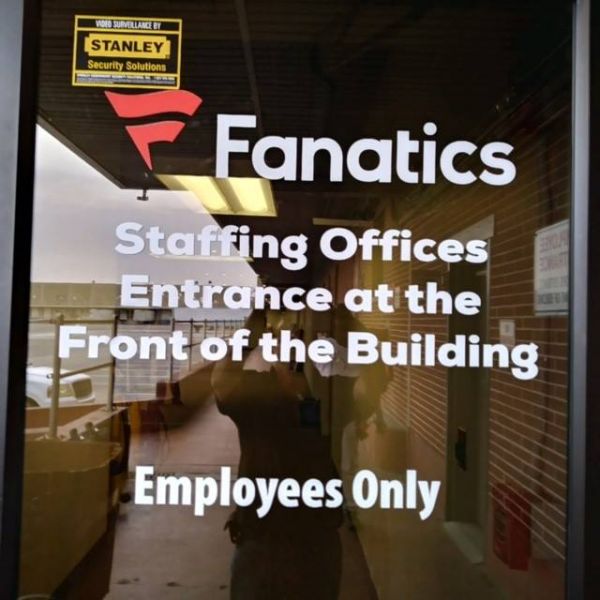
Yes — Third Ward signage is core work for us. We design to the board’s materials, illumination, and projection standards, prepare the elevations and narrative the submission requires, and present at the review meeting when needed. Our typical Third Ward projects are projecting blade signs, dimensional letter sets, and storefront window programs.
How does install scheduling work in downtown Milwaukee?
Most downtown installs require coordination with building management, certificates of insurance, and often Right-of-Way permits for lift work over sidewalks or streets. We schedule around your business hours — early morning, after close, or weekends are common — and handle all the permit-pulling and property-manager coordination as part of the project.
Do you work with downtown property managers and building owners on multi-tenant signage programs?
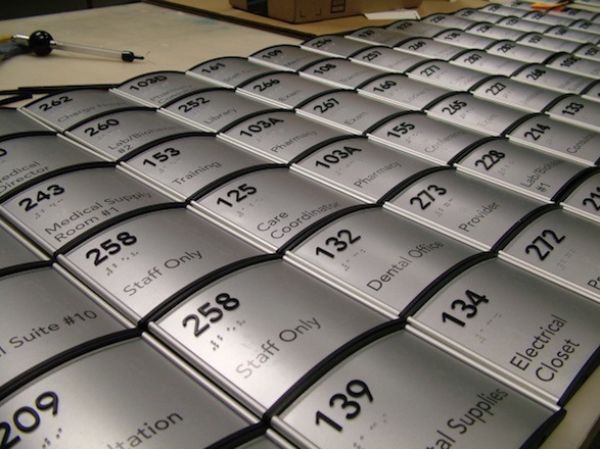
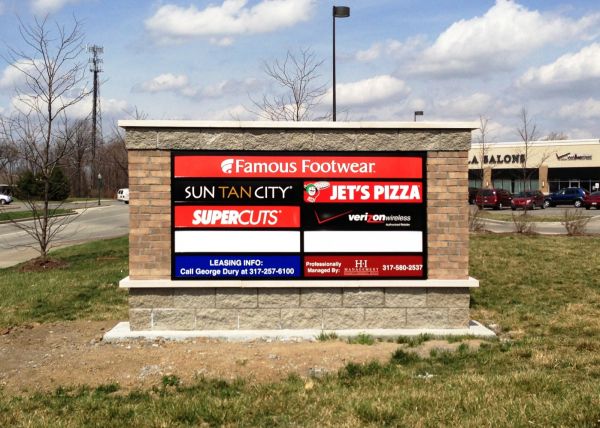
Yes. Tenant directory monuments, building-mounted tenant IDs, multi-tenant pylons, exterior tenant strip signs, and full interior wayfinding programs are projects we handle for corporate towers, mixed-use developments, professional buildings, and hospitality properties throughout the downtown core. We design to building sign criteria and coordinate the rollout with property management.
What does a typical downtown Milwaukee sign project cost?
Vinyl window or door graphics for a downtown storefront generally run $300 to $1,800 installed. Projecting blade signs in the Third Ward typically land between $1,800 and $5,500 depending on size, materials, and mounting. Channel-letter sets on a downtown building range from $5,500 to $22,000 installed depending on letter size, depth, illumination type, and any required engineering for the mounting. Interior lobby signs and dimensional letter sets are typically $1,400 to $5,000 installed. Every quote is fixed-price and includes design, permits, fabrication, installation, and final inspection.
How long does a downtown Milwaukee sign project take from approved design to installed sign?
For interior signs that don’t require a permit, four to six weeks. For exterior signs subject only to a standard city sign permit, eight to ten weeks. For exterior signs that require Historic Third Ward ARB review or Downtown Design Review, plan on twelve to sixteen weeks total because the review boards meet on a fixed monthly schedule. We work the meeting calendar into the project timeline from the start.
Are downtown signs built to handle Milwaukee lake-effect weather?
Yes. Aluminum (not steel) cabinets and channel-letter retainers for corrosion resistance, sealed and UL-listed LED modules, stainless and zinc-plated mounting hardware, and polycarbonate faces on lakefront-facing or wind-exposed installations. Downtown signs we install are designed for a fifteen-plus-year service life.