Commercial Sign Repair and Maintenance: A Guide for Milwaukee Businesses
Commercial sign repair should begin when a sign becomes difficult to read, lights unevenly, leaks, rattles, shows loose hardware, or no longer presents the business accurately. Early service can limit damage to faces, LEDs, wiring, cabinets, fasteners, and supports. Electrical or elevated work should be inspected and completed by qualified sign professionals, not treated as a do-it-yourself maintenance task.
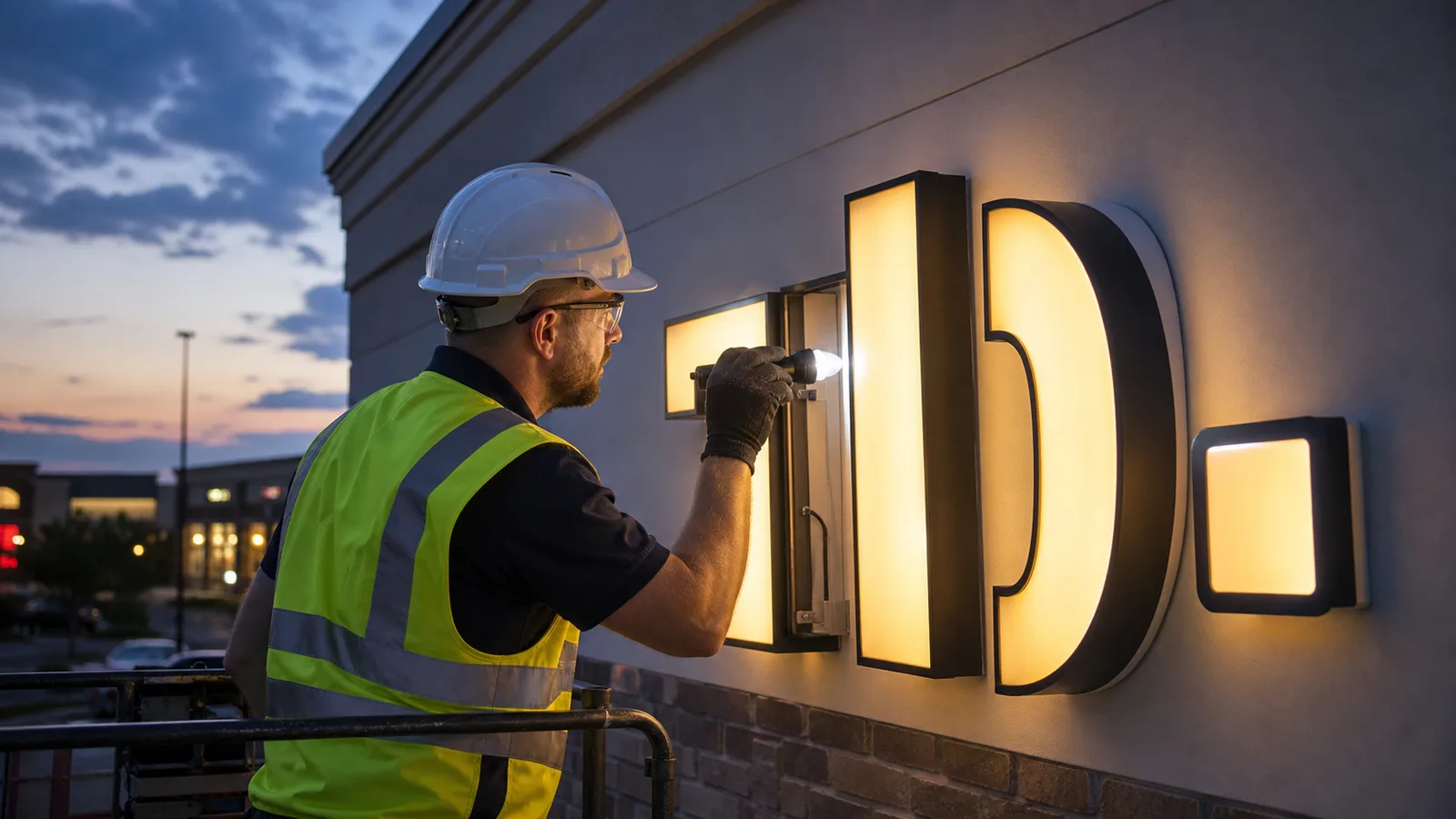
For Milwaukee businesses, a sign also has to withstand moisture, road salt, wind, summer heat, snow, ice, and repeated freeze-thaw cycles. A practical sign repair and maintenance plan catches small problems before they create a dark storefront, a damaged cabinet, a safety concern, or an emergency service call.
When does a business sign need repair?
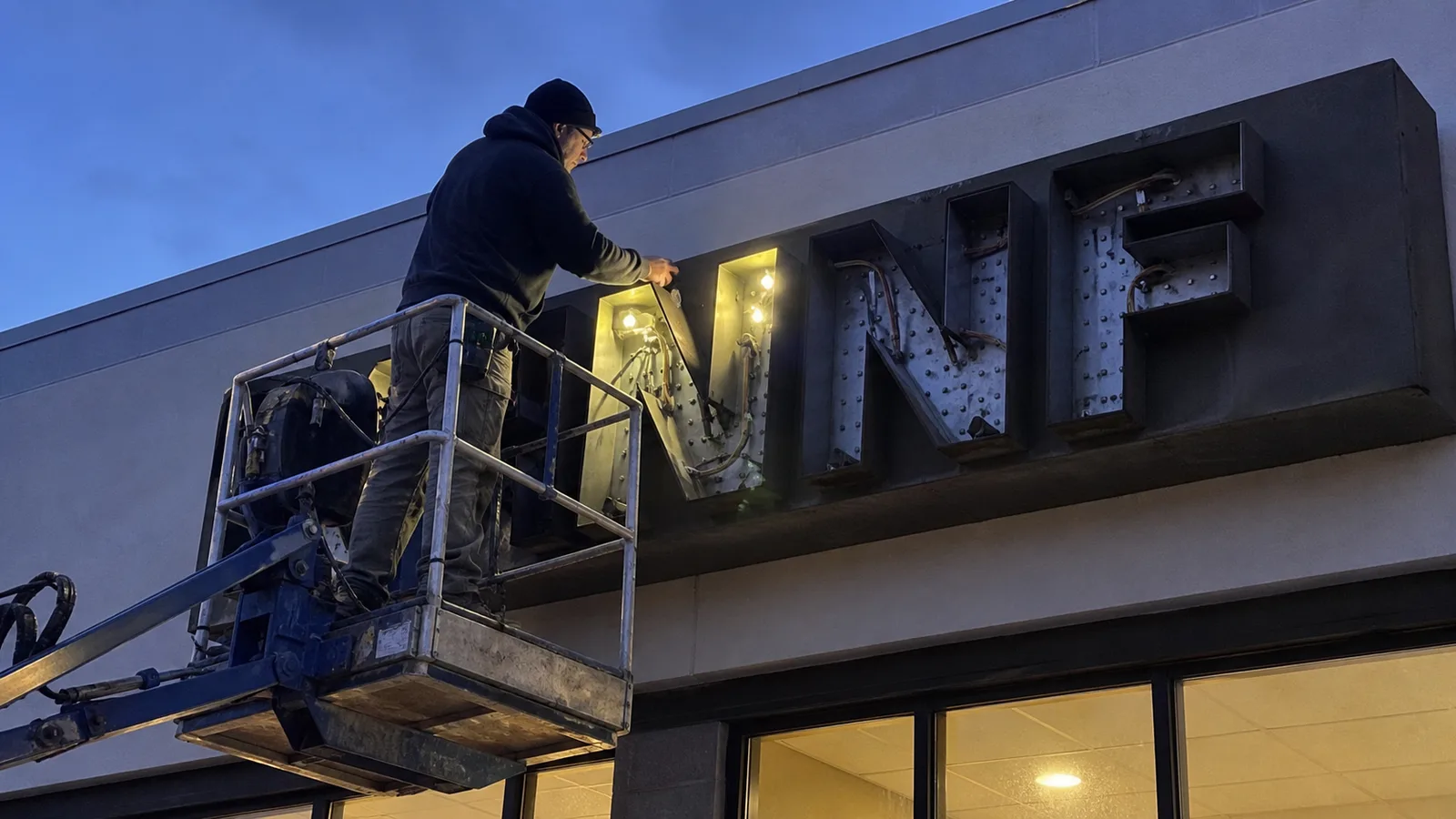
Request an inspection when you notice any of the following:
- all or part of an illuminated sign is dark;
- LEDs flicker, flash, or change brightness;
- a cabinet face is cracked, loose, yellowed, or water-stained;
- channel letters illuminate in different colors or intensities;
- a sign leans, moves, rattles, or has loose visible fasteners;
- wiring, conduit, power supplies, or disconnects appear damaged;
- water or condensation is visible inside a cabinet;
- vinyl graphics are peeling or text is no longer readable;
- rust, corrosion, or failed sealant appears at seams or penetrations;
- a monument or pylon has impact damage;
- digital displays show dead modules, lines, or communication errors; or
- the sign contains outdated branding, hours, tenant names, or contact information.
If a sign is sparking, smoking, visibly loose, or damaged by a vehicle or storm, keep people away from the area and contact the property manager, utility, emergency services, or a qualified sign/electrical professional as appropriate. Do not open an energized cabinet or climb to inspect a sign without the correct training and equipment.
What commercial sign repair usually includes
LED and electric sign repair
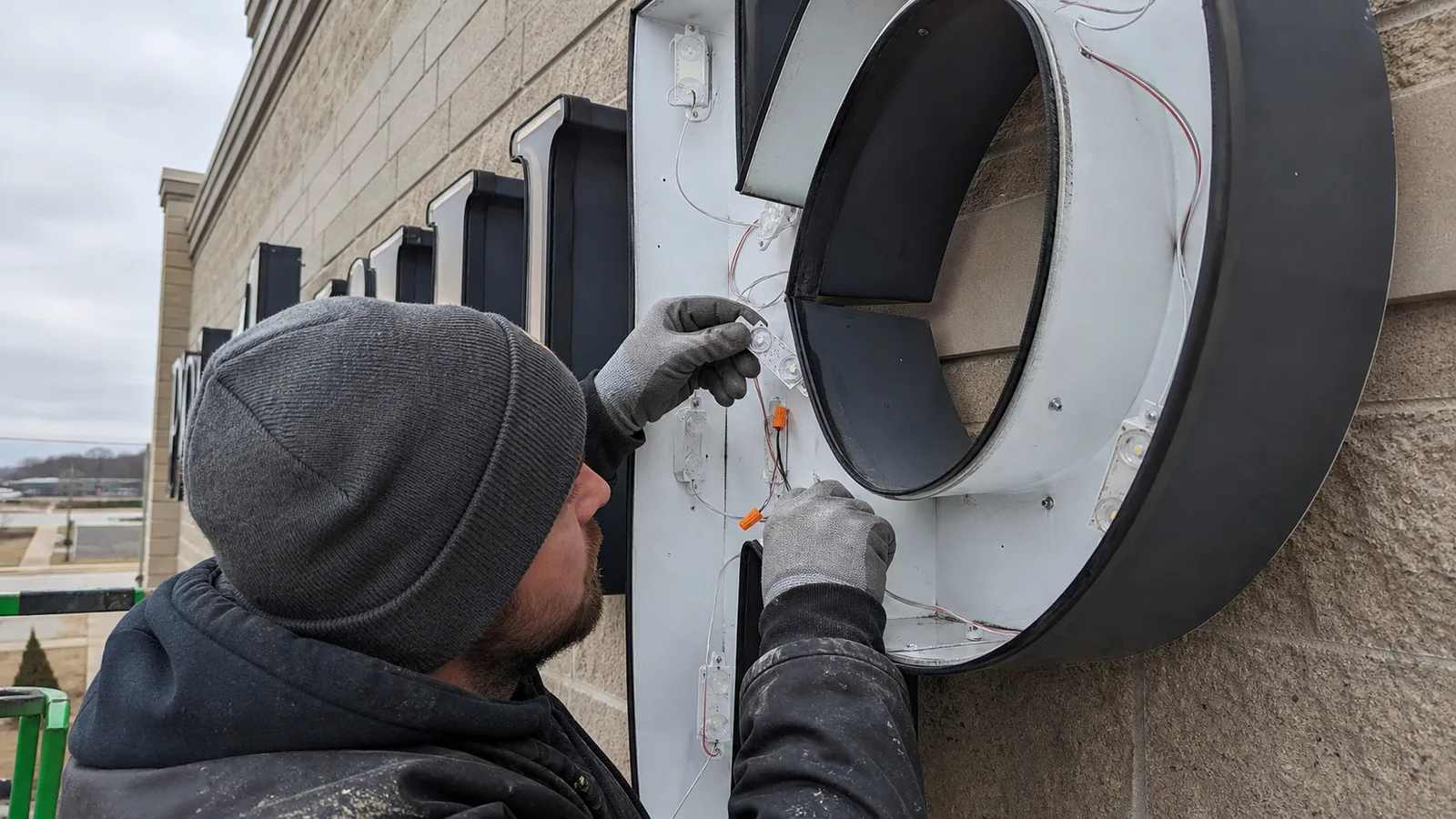
An electric sign may contain LED modules, drivers or power supplies, wiring, disconnects, photocells, timers, illuminated faces, and weather-resistant connections. Diagnosis should identify the actual failure rather than replace parts at random.
Common electric sign repairs include:
- replacing failed LED modules or power supplies;
- correcting loose or damaged low-voltage connections;
- repairing raceway or cabinet wiring;
- replacing photocells, timers, or switches;
- resealing penetrations and cabinet seams;
- correcting uneven illumination;
- replacing damaged faces or retainers; and
- converting older lighting systems when appropriate.
UL Solutions notes that UL published its first safety standard for electric signs in 1917 and that modern electric-sign certification is built around UL 48. The practical takeaway for an owner is simple: electric sign work involves a listed system, enclosure, components, and field conditions. Service should preserve safety and code compliance, not merely make the sign light up again.
Channel letter repair
Channel letters can fail one letter at a time, which makes a storefront look neglected even when the rest of the sign is bright. The problem may be a module, driver, wiring connection, damaged face, loose trim cap, water intrusion, or an issue with the electrical feed.
A technician should compare color and brightness before replacing individual modules. New LEDs can look noticeably different beside older ones. When several letters are dim or the system is near the same age, replacing modules as a coordinated set may produce a better visual result and reduce repeat service visits.
See our lighted sign options and channel letter sign services for the construction types commonly encountered during repair.
Cabinet, pylon, and monument sign repair
Freestanding signs combine visible faces with structural, electrical, and foundation components. Service may include face replacement, tenant-panel updates, cabinet repair, LED work, paint and finish restoration, sealant replacement, access-door repair, or impact-damage evaluation.
Do not treat leaning, collision damage, exposed steel, cracked masonry, or movement at the base as cosmetic. Those conditions require a closer structural review before face or lighting work begins.
Face, panel, and graphic replacement
Sometimes the structure is sound but the message is worn or outdated. Replacing an acrylic or polycarbonate face, routed panel, vinyl graphic, tenant strip, or printed overlay can refresh the sign without rebuilding the complete system.
Before production, confirm:
- exact cabinet and visible-opening dimensions;
- face material and thickness;
- single- or double-sided construction;
- illumination method;
- color and translucency requirements;
- attachment and retainer details;
- landlord or brand standards; and
- whether the copy change triggers a permit review.
Non-illuminated and interior sign repair
Commercial sign repair also covers dimensional letters, lobby signs, wayfinding panels, directories, wall graphics, post-and-panel signs, banners, and ADA identification systems. Work may involve replacing standoffs, repairing substrates, matching missing letters, updating room information, removing failed adhesive, or rebuilding a modular panel.
For ADA-regulated signs, a visual patch is not enough if tactile characters, Braille, contrast, mounting location, or other required features are affected. Replacement should preserve the applicable accessibility requirements.
Repair or replace: how to make the decision
Repair is usually sensible when:
- the structure and cabinet are sound;
- the sign still fits the current brand and location;
- damage is limited to a face, panel, lighting circuit, or small component group;
- replacement parts can be matched;
- the sign remains code-compliant; and
- repair will provide a meaningful service life.
Replacement may be better when:
- several systems are failing at once;
- the sign is badly corroded, structurally damaged, or repeatedly leaking;
- faces, wiring, illumination, finishes, and branding all need work;
- parts are obsolete or difficult to service;
- energy use and maintenance are consistently high;
- the property or tenant mix has changed; or
- a new sign type would solve visibility and wayfinding problems that repair cannot.
Ask for a written scope separating immediate repair from optional upgrades. That makes it easier to compare the cost of restoring the current sign with the cost and benefit of replacement.
A preventive sign maintenance checklist
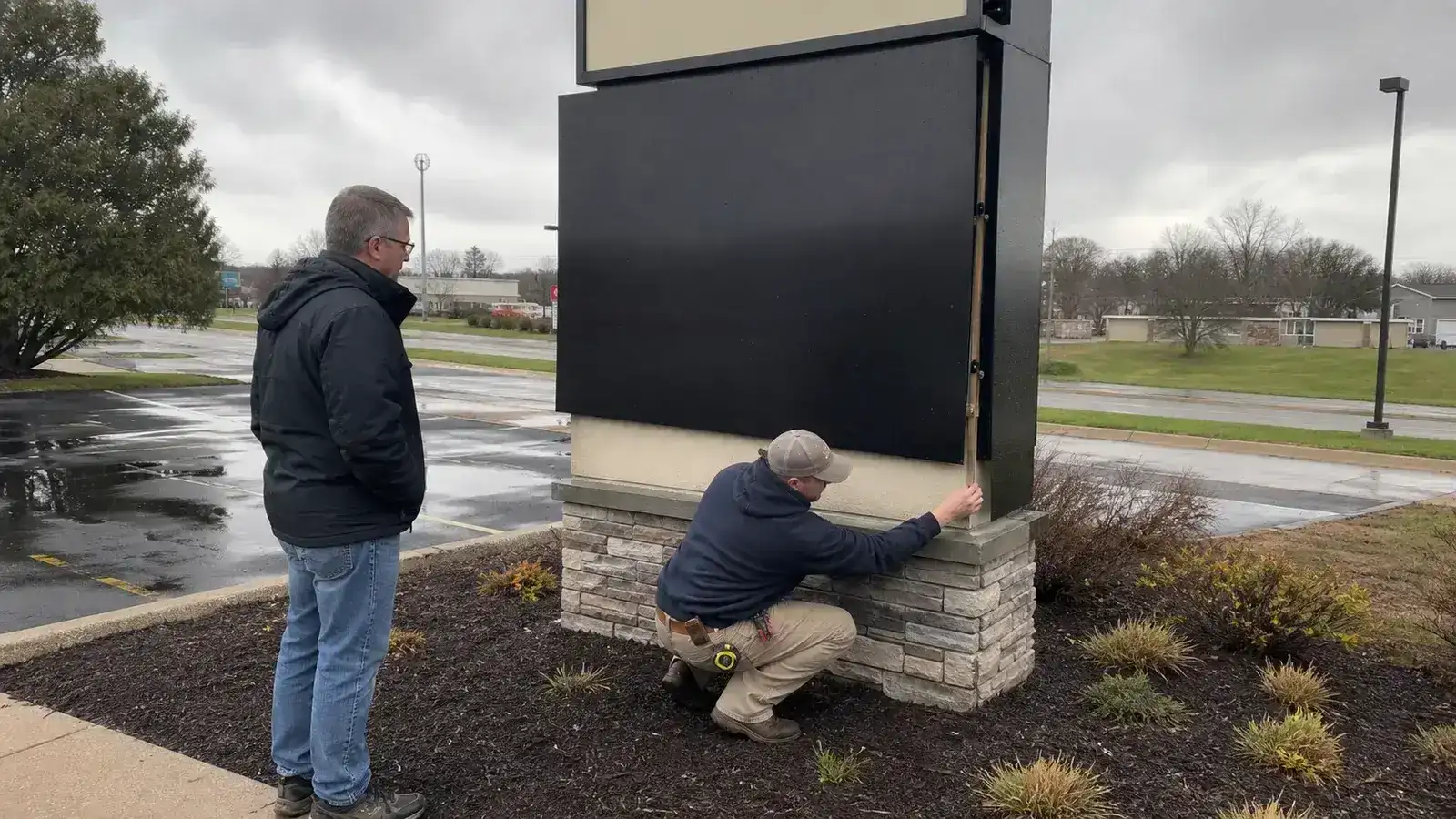
Monthly visual check from the ground
- View the sign in daylight and after dark.
- Confirm every letter and panel illuminates evenly.
- Look for movement, leaning, open access panels, cracks, stains, and peeling graphics.
- Check that landscaping does not block the message or trap moisture against the base.
- Photograph developing problems from the same location so changes are easy to compare.
After major storms or impact
- Inspect for loose faces, shifted cabinets, damaged poles, cracked masonry, exposed wiring, and debris.
- Keep the public away from any loose or energized area.
- Document damage for the property manager and insurer before temporary work, when safe.
Spring service
Winter is hard on exterior signs. Spring is a good time to clean faces, remove salt and grime, check seals and drains, inspect lower cabinets and bases, and address corrosion before summer.
Before daylight-saving or seasonal-hour changes
Check timers and photocells so the sign illuminates when customers expect it. If the business uses changeable messages, verify that current hours, promotions, and tenant information are accurate.
During a rebrand or tenant change
Audit all related signs—not only the primary storefront. Include monument and pylon panels, lobby signs, directories, wayfinding, hours, window graphics, fleet graphics, and code-required identification.
Why planned maintenance costs less than reactive service
A dark letter may look like one failed component, but repeated truck rolls, lift rental, diagnostics, and access time can make piecemeal repair expensive. Grouping known work into a planned visit can reduce mobilization and downtime.
Preventive inspection can also reveal causes that a simple part swap would miss:
- water entering through an unsealed seam;
- heat building around an overloaded or poorly ventilated power supply;
- wiring abrasion at a penetration;
- drainage blocked by debris;
- a face moving because a retainer is loose; or
- vibration loosening hardware on a freestanding sign.
The goal is not to replace every old component. It is to correct the failure and the condition that caused it.
Permits, access, and documentation in Milwaukee
Some maintenance is like-for-like service, while other work changes the face, structure, electrical system, size, location, or sign type enough to require review. The City of Milwaukee’s sign-permit information sheet explains that sign drawings should document materials, mounting, illumination, and structural-support information for review. Other municipalities use different forms and thresholds.
Before scheduling service, gather:
- property address and business name;
- clear daytime and nighttime photos;
- approximate sign dimensions and height;
- access conditions and parking restrictions;
- any recent storm or impact details;
- original sign drawings, permits, and electrical information if available;
- landlord or property-manager approval; and
- a list of every observed symptom.
Good records reduce diagnostic time and help the service team arrive with the right lift, materials, and replacement components.
Frequently asked questions
Who repairs commercial signs near Milwaukee?
Choose a sign company equipped to diagnose the specific sign type, work safely at the required height, source compatible components, and coordinate structural or electrical work when needed. Milwaukee Sign Company provides sign design, fabrication, installation, repairs, and maintenance for businesses in southeastern Wisconsin.
Can you replace only one dark channel letter?
Often, yes. The technician still needs to diagnose whether the failure is in that letter, a shared power supply, wiring, or the electrical feed. Brightness and color should be checked so the repaired letter does not look mismatched.
How often should a business sign be inspected?
Owners should perform a simple ground-level visual check monthly and after major storms or impacts. The need for professional preventive service depends on sign type, height, age, illumination, exposure, tenant turnover, and prior repairs.
Does changing a sign face require a permit?
It may. A like-for-like repair can be treated differently from new copy, structural changes, electrical changes, a larger face, or a new sign type. Confirm the scope with the local municipality before production.
Can an older fluorescent or neon sign be converted to LED?
Many signs can be converted, but the cabinet, faces, spacing, electrical components, heat management, brightness, listing, and permit requirements need to be evaluated. A conversion should be designed as a system rather than as an improvised lamp replacement.
Schedule commercial sign repair
Milwaukee Sign Company can inspect illuminated and non-illuminated business signs, explain the failure, and provide a written repair or replacement recommendation. View our commercial business sign services or request sign repair and maintenance. Include photos and the property address so the team can assess access and likely components before the visit.