
How Long Do Car Wraps Last? Vehicle Wrap Lifespan and Care in Wisconsin
Most professionally installed cast-vinyl vehicle wraps last about five to seven years in daily Wisconsin service. Premium products may carry longer vertical-surface warranties, but roofs, hoods, road salt, direct sun, washing habits, paint condition, and installation quality all affect real-world vehicle wrap durability. A well-maintained garage-kept wrap can outlast a neglected outdoor vehicle by years.
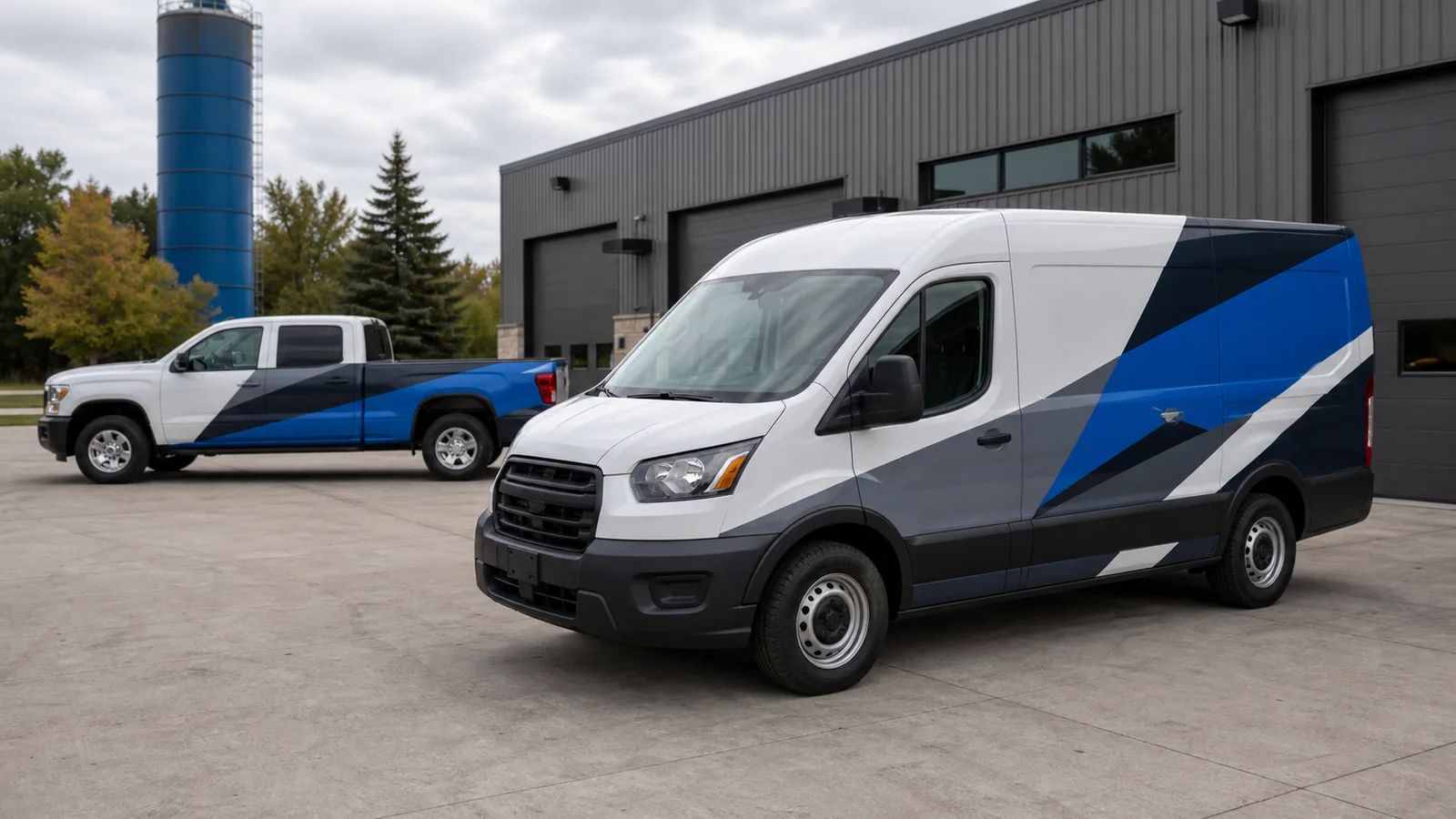
For business owners, the useful question is not only “how long do car wraps last?” It is also: How long will the graphics continue to represent the company well? A wrap can remain attached after it has faded, cracked, or lifted enough to weaken the brand impression. Planning inspection, maintenance, and replacement around appearance—not just adhesion—protects the marketing value of the vehicle.
Vehicle wrap lifespan at a glance
| Wrap area or condition | Practical planning range | Why it changes |
|---|---|---|
| Vertical doors and side panels | About 5–7 years | Less direct sun and standing moisture than horizontal panels |
| Hood, roof, and upper surfaces | Often 2–4 years before visible wear | More ultraviolet exposure, heat, snow, ice, and contamination |
| Garage-kept, lightly driven vehicle | Often toward the high end | Reduced UV, weather, and road-salt exposure |
| Outdoor fleet vehicle driven every day | Often toward the lower end | More mileage, washing, salt, fuel spills, and edge stress |
| Economy calendared vinyl | Usually shorter than premium cast film | Less conformability and dimensional stability |
These are planning ranges, not universal warranties. For example, 3M states that Wrap Film Series 2080 may have warranty coverage up to eight years on vertical exposure and up to three years on horizontal exposure, depending on the product, application, and warranty terms. That difference between vertical and horizontal exposure is why a hood can show wear before the door graphics beside it.
What determines how long a vehicle wrap lasts?
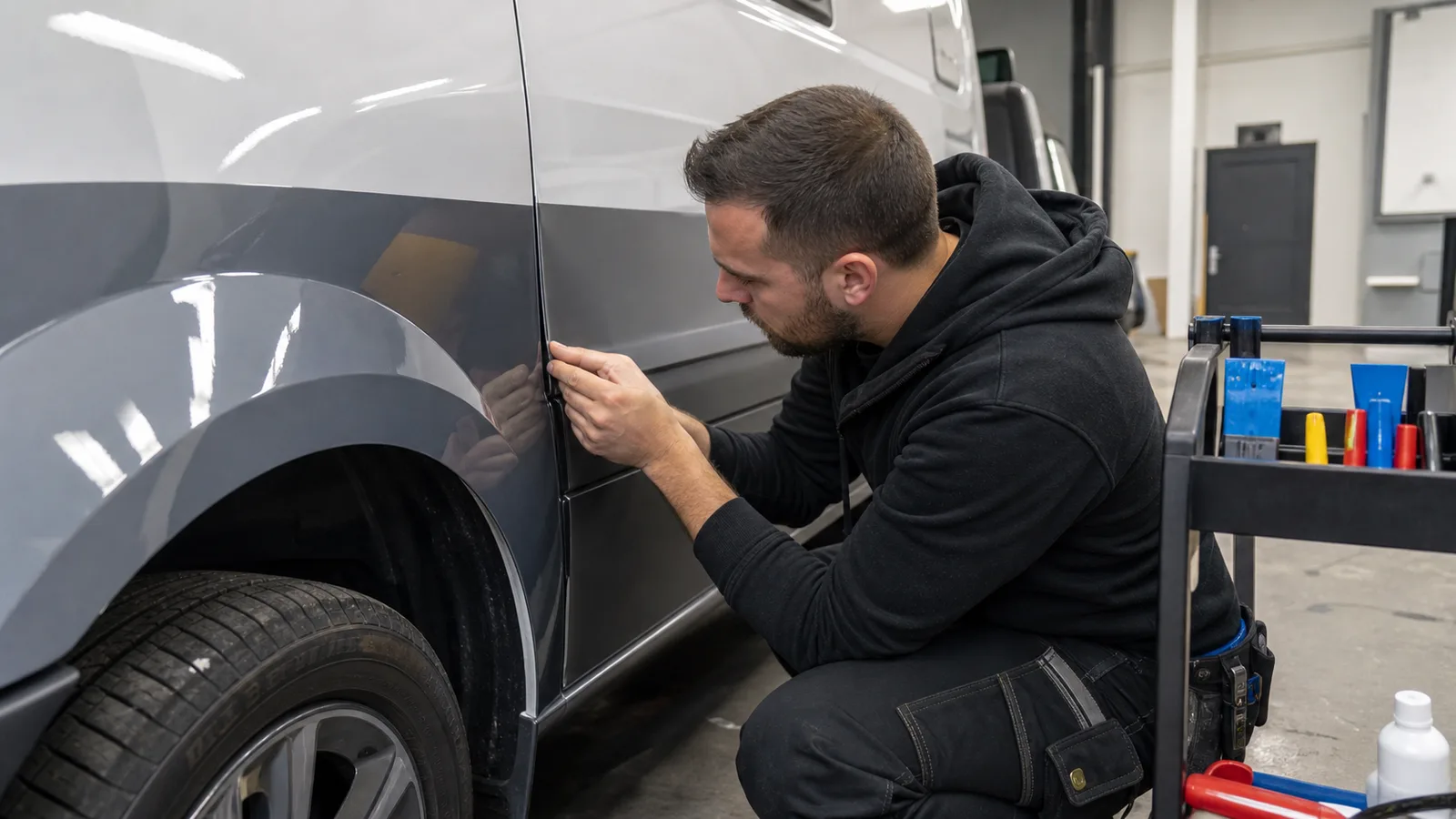
1. Film and laminate quality
The material system matters. Premium cast vinyl is designed to conform around curves, recesses, rivets, and complex body panels while remaining dimensionally stable. Printed commercial wraps also need a compatible overlaminate to protect the ink from abrasion, chemicals, road grime, and ultraviolet exposure.
An installer should be able to identify the exact vinyl and laminate on the estimate. “Premium vinyl” by itself is not enough information. Ask for the manufacturer, product family, finish, expected exposure, and written material warranty. The least expensive material is rarely the lowest-cost choice if an otherwise sound fleet wrap must be replaced early.
2. Installation and surface preparation
Even excellent film can fail early when it is installed over wax, silicone, oil, rust, loose clear coat, or an uncured repaint. Proper preparation includes inspecting the paint, removing surface contamination, cleaning edges and recesses, controlling the installation temperature, and post-heating areas where the film has been stretched.
Edges are especially important in Wisconsin. A small lifted edge can collect wash water and winter grime. Freeze-thaw cycles then enlarge the failure. Correct trimming, edge placement, and post-install inspection help prevent a small defect from becoming a peeled panel.
If the vehicle has aftermarket paint or body repair, tell the installer before production. Vinyl may adhere differently to a repaint than to sound factory paint, and removal risk can be higher.
3. Horizontal versus vertical exposure
Roofs, hoods, trunk lids, and the top shoulders of vans receive more direct sunlight than vertical doors. They also hold snow, ice, tree debris, and water. That extra exposure is why film manufacturers publish different durability or warranty conditions for horizontal surfaces.
For a commercial fleet, this can influence the design. A business may choose a partial wrap focused on the sides and rear, where customers see the message and the film typically experiences less severe exposure. The right coverage depends on the vehicle, viewing angles, budget, and replacement plan. Our vehicle wrap cost guide explains how coverage affects the initial price.
4. Sun, heat, and storage
Ultraviolet light gradually changes pigments, gloss, and the film itself. Heat accelerates that process. A vehicle parked in the same outdoor position every day may fade unevenly, with the south- or west-facing side aging faster.
Whenever practical, park indoors, under a roof, or in shade. The 3M Wrap Film Product Care Guide specifically recommends indoor, shaded, or covered storage when possible to reduce heat and UV exposure.
5. Wisconsin road salt and winter grime
Road brine and salt do not automatically ruin a wrap, but leaving contamination on the film increases the chance of staining and edge problems. Pay extra attention to wheel arches, rocker panels, lower doors, rear bumpers, and seams where dirty water collects.
During winter, rinse the vehicle often enough that salt does not build into a hard layer. Do not chip ice with a scraper or use an abrasive brush on wrapped panels. If an edge is already lifting, avoid aiming a pressure washer at it and schedule an inspection before the opening grows.
6. Washing method
Hand washing is the safest default. Use clean water, a mild automotive detergent, and a soft sponge or microfiber wash mitt. Work from the top down, rinse thoroughly, and dry with a clean microfiber towel or silicone squeegee to reduce water spotting.
Avery Dennison’s current vehicle-wrap maintenance bulletin recommends regular cleaning and notes that improper or infrequent maintenance can shorten the expected life of the graphics. Its consumer care instructions recommend waiting 48 hours after installation and then washing about every two weeks, while 3M’s care guide says not to wash for the first 72 hours. Follow the instructions for the actual film system your installer used.
Brush-style automatic washes can scratch the surface, dull the finish, or catch an edge. If hand washing is not practical, a touchless wash is generally the safer automatic option. Pressure washing requires special care: keep the nozzle back, reduce pressure, and do not spray directly into edges, seams, or damaged areas.
A practical car wrap maintenance schedule
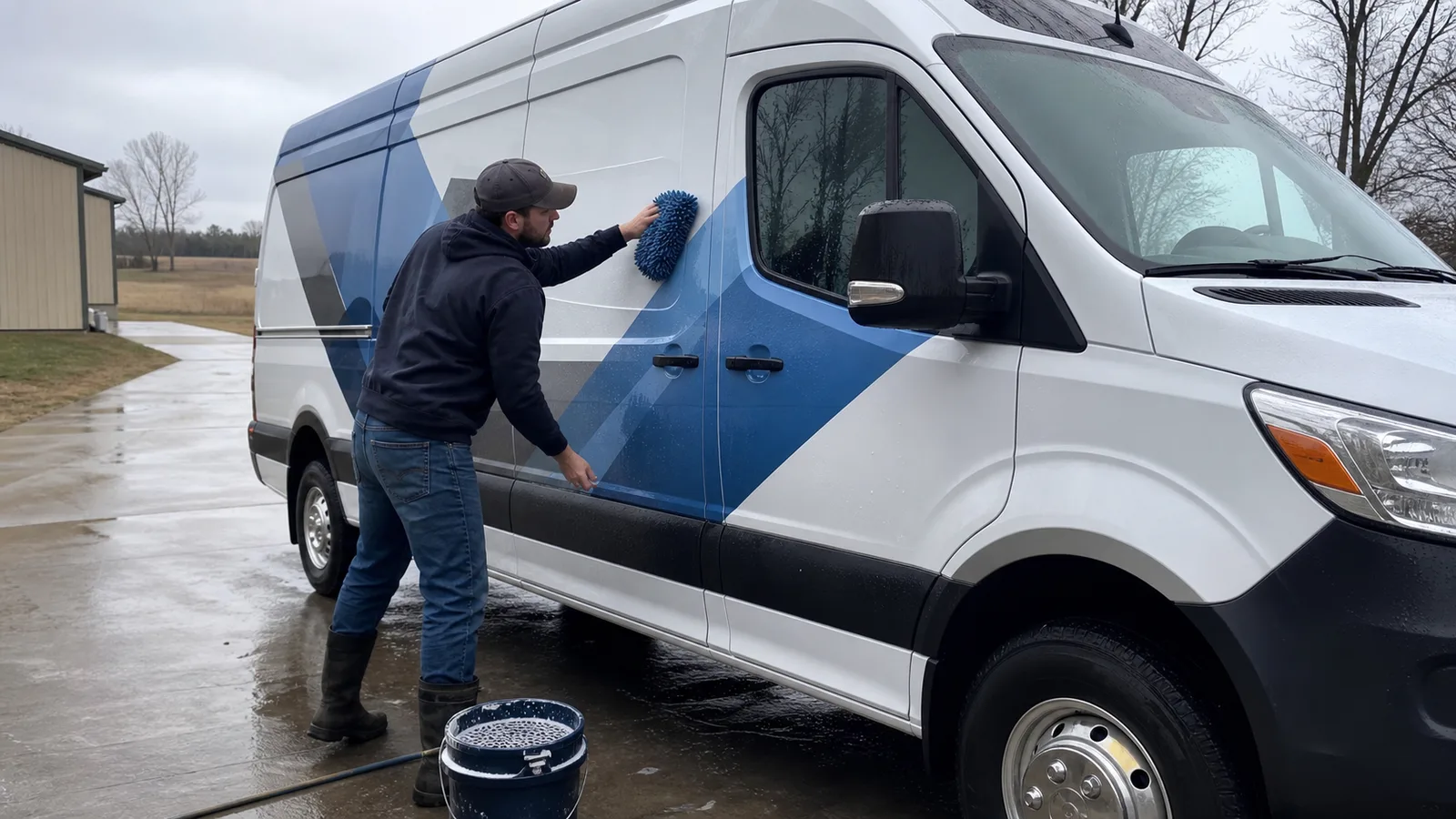
After installation
- Follow the installer’s cure-time instructions before washing.
- Inspect edges, mirrors, door handles, and deep recesses after the first few days.
- Return promptly if a small edge lifts; early correction is easier than repairing a contaminated opening.
- Save the estimate, material names, color codes, warranty, and care instructions.
Every one to two weeks
- Rinse loose grit before touching the film.
- Hand wash with a pH-balanced automotive soap and soft tools.
- Remove bird droppings, insects, tree sap, fuel, and road tar quickly.
- Dry the wrap instead of allowing mineral-heavy water to sit on it.
Monthly
- Inspect lower doors, wheel arches, bumpers, panel seams, and roof edges.
- Look for lifted corners, bubbles, cracks, discoloration, or areas that remain dull after cleaning.
- Check that no body damage or rust is developing beneath exposed edges.
Each spring
- Give winter-driven vehicles a detailed wash to remove remaining salt and grime.
- Have questionable edges checked before summer heat increases stress.
- Compare high-exposure areas with protected vertical panels to spot uneven aging.
How do you know when a wrap needs repair or replacement?
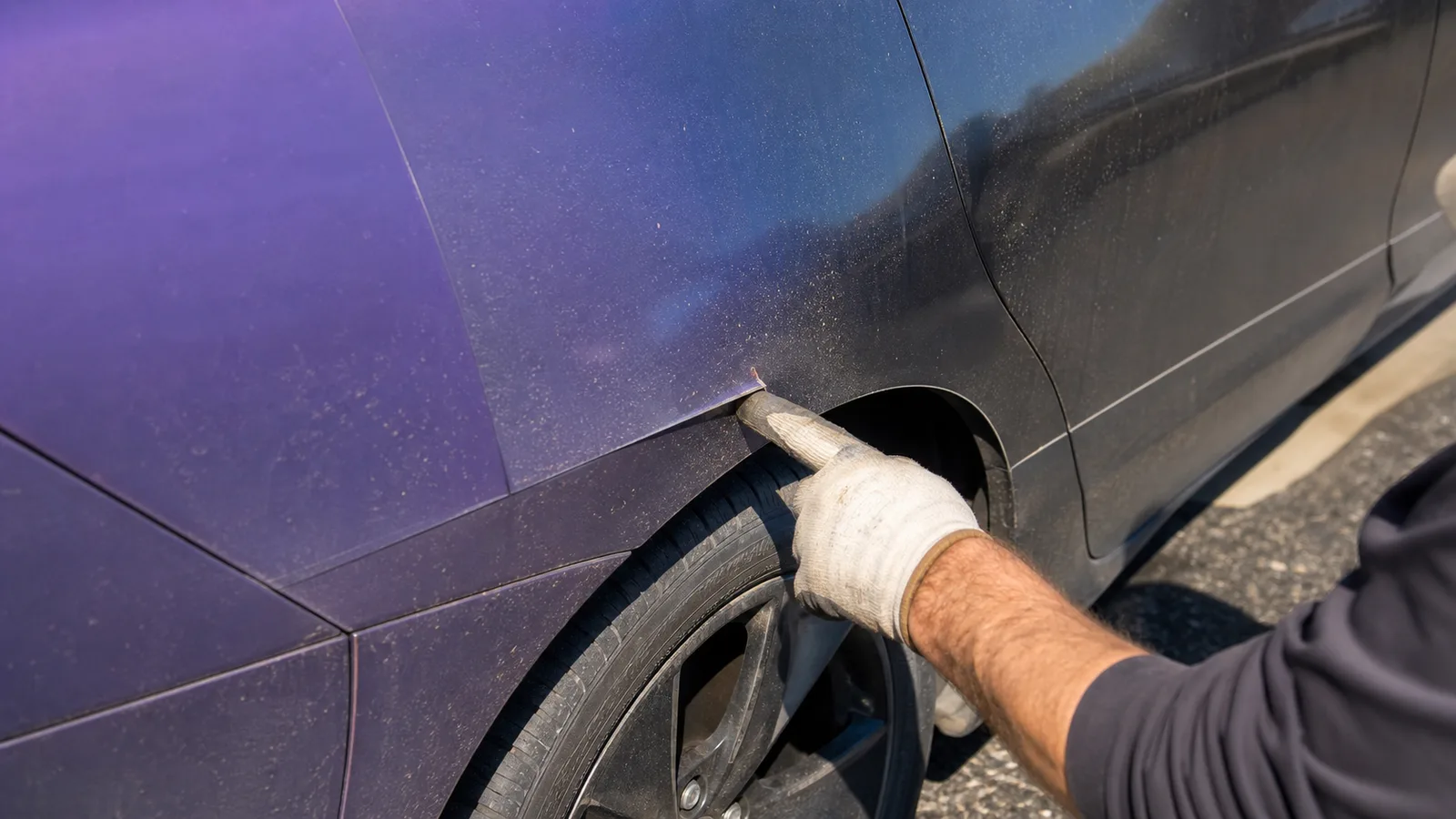
Schedule an evaluation when you see:
- edges that continue to lift after cleaning;
- cracking, crazing, or brittle film;
- major fading or color mismatch between panels;
- laminate separation, cloudy areas, or persistent loss of gloss;
- bubbles that reappear or expand;
- collision damage, rust, or failed paint beneath the film; or
- graphics that contain outdated branding, offers, phone numbers, or fleet information.
A localized damaged panel can sometimes be reprinted and replaced when the original production file and film are still available. Exact color matching becomes harder as the installed film ages, so a repair may be more noticeable on an older wrap. When several panels are worn, full removal and replacement is often the cleaner business decision.
Do not wait until aged vinyl becomes brittle. Removing film within its intended service window is usually easier and more predictable than removing a wrap that has been left on far beyond it.
Full wrap, partial wrap, or vinyl lettering?
A full wrap offers the most visual coverage but also places vinyl on more complex and highly exposed surfaces. A partial wrap can focus the design on the doors, rear quarters, and back of the vehicle while using the paint color as part of the layout. Cut vinyl lettering and graphics can be the right option for fleets that need durable identification without full-panel coverage.
The best choice depends on how long the vehicle will remain in the fleet, where it is parked, the amount of daily driving, how often branding changes, and the budget per vehicle. Milwaukee Sign Company can plan the graphics around those operational realities instead of forcing every business into the same coverage package.
Frequently asked questions
How long do vinyl wraps last on cars that are driven every day?
For a daily-driven vehicle with premium cast film, professional installation, and regular maintenance, a five-to-seven-year planning range is reasonable. Heavy sun, outdoor storage, high mileage, salt exposure, and frequent aggressive washing can shorten that range, especially on the hood and roof.
Can road salt damage a vehicle wrap?
Salt is most harmful when it remains on the film or collects beneath a lifted edge. Rinse winter grime regularly, clean the lower panels carefully, and repair lifting before water and salt can work underneath the vinyl.
Can I take a wrapped vehicle through a car wash?
Hand washing is preferred. If necessary, choose a touchless wash rather than a brush wash. Brushes can scratch the finish or catch an edge. Follow the film manufacturer’s pressure and chemical guidance.
Does a wrap protect the paint?
Vinyl can shield sound factory paint from normal UV exposure and light surface abrasion, but it is not impact protection. It will not correct failing clear coat, rust, dents, or poor prior bodywork, and removal risk is higher over unsound or aftermarket paint.
Should I repair one panel or replace the whole wrap?
One-panel repair can work when damage is localized and the production file and matching film remain available. Replacement is usually better when several panels are faded, brittle, lifting, or outdated.
Plan a wrap that lasts
The most durable wrap starts with the right film, a realistic coverage plan, careful preparation, and maintenance instructions the driver will actually follow. See our commercial vehicle wrap services or request a vehicle and fleet graphics quote. We can inspect the vehicle, explain material options, and provide a written scope for design, production, installation, and care.